
China's Shenzhou-24 launches with Muhammad Zeeshan Ali, first foreign astronaut to visit Tiangong
Pakistan Air Force pilot Muhammad Zeeshan Ali joined two Chinese astronauts aboard Shenzhou-24 on November 25, 2026, becoming the first international visitor to China's Tiangong space station and the first Pakistani citizen in Earth orbit.

China launched its Shenzhou-24 crewed spacecraft on Wednesday, November 25, 2026, marking the first time a non-Chinese national has flown aboard a Chinese crewed mission to the Tiangong space station. Liftoff occurred at 8:18 a.m. Beijing Time (00:18 GMT; 5:18 a.m. PKT; 5:48 a.m. IST) atop a Long March-2F carrier rocket from the Jiuquan Satellite Launch Center in northwest China, according to Xinhua.
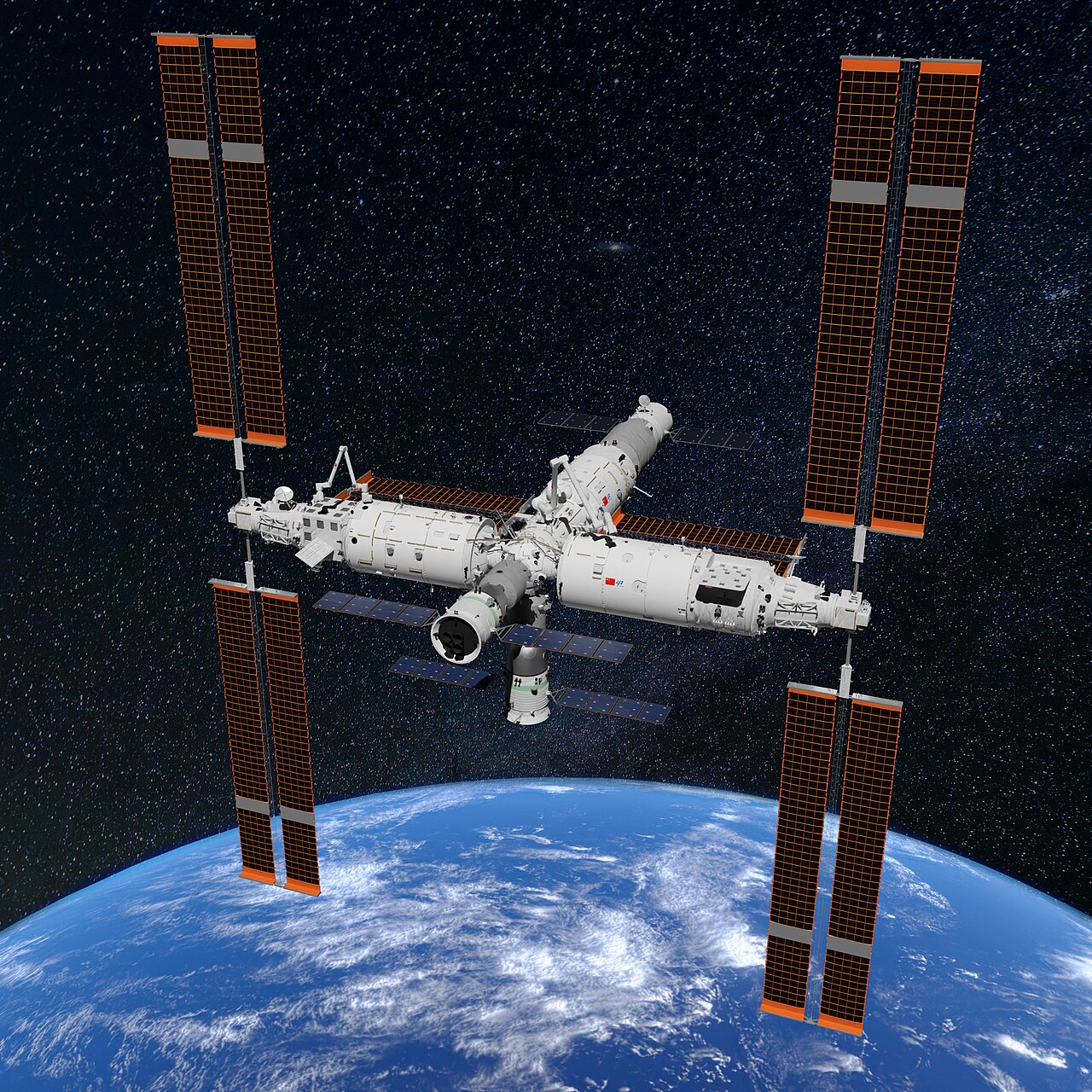
Roughly 10 minutes after liftoff, the spacecraft separated from the rocket and entered its designated orbit. Following a rapid automated rendezvous lasting about three and a half hours, Shenzhou-24 docked with the forward port of Tiangong's Tianhe core module at 11:56 a.m. Beijing Time, as reported by SpacePolicyOnline. At 2:35 p.m. Beijing Time, the three astronauts aboard Shenzhou-23 opened the station's hatch to welcome the incoming crew, marking the ninth orbital crew gathering in China's human spaceflight history.
Crew composition and mission timeline
The Shenzhou-24 crew combines veteran Chinese leadership with two first-time flyers:
- Tang Hongbo (Commander, China): Making his third spaceflight after flying on Shenzhou-12 in 2021 and Shenzhou-17 in 2024, Tang is the first astronaut to visit Tiangong three times.
- Wu Yi (Flight Engineer, China): Selected from China's third group of astronauts, Wu is making his first trip to orbit.
- Muhammad Zeeshan Ali (Payload Specialist, Pakistan): A 40-year-old Pakistan Air Force pilot, Ali is both the first foreign astronaut to board Tiangong and the first Pakistani to reach Earth orbit. While Pakistani adventurer Namira Salim reached suborbital space on a commercial Virgin Galactic flight in October 2023, Ali is the country's first orbital astronaut.
While Tang and Wu will remain aboard the three-module station for a standard six-month rotation, Ali's stay will last between five and 10 days—roughly one week—before he returns to Earth aboard the Shenzhou-23 spacecraft alongside departing Shenzhou-23 crew members Zhang Zhiyuan and Li Jiaying, the first female astronaut from Hong Kong.
To accommodate Ali's short-term flight and advance long-duration human research, the third Shenzhou-23 crew member, Zhu Yangzhu—who arrived at Tiangong in May 2026—will remain in orbit for an additional six months. This will make Zhu the first Chinese astronaut to complete a continuous year-long stay in low Earth orbit, according to Space.com.
Scientific objectives and joint experiments
Across its six-month mission, the Shenzhou-24 crew is scheduled to conduct more than 90 scientific experiments and technology demonstrations spanning space life sciences, space medicine, materials science, microgravity fluid physics, combustion, and fundamental physics, according to China Manned Space Agency (CMSA) spokesperson Zhang Jingbo.
During his week in orbit, Ali's primary responsibility is to install, calibrate, and initiate four collaborative China-Pakistan experiments in biotechnology and materials science, which will continue operating aboard Tiangong for six to 12 months:
- Photosynthetic cyanobacteria: Proposed by the Pakistan Space and Upper Atmosphere Research Commission (SUPARCO), this experiment studies how cyanobacteria behave in microgravity to support future oxygen regeneration and biomanufacturing systems for space stations and deep-space habitats.
- Space-exposed quinoa seeds: Led by the University of Agriculture, Faisalabad, this project exposes 32 quinoa seed samples outside the station for roughly one year to evaluate stress tolerance and longevity, aiming to identify hardier, climate-resilient crop varieties.
- Multilayer graphene composites: A materials science investigation examining multilayer graphene-based hybrid composites in microgravity.
- Self-healing carbon fiber: Testing solar-heated, self-healing carbon fiber composites designed for durable aerospace structures.
Meanwhile, Zhu Yangzhu's year-long mission will gather macro- and micro-level biomedical data on how the human body adapts to prolonged weightlessness, helping China refine life-support and astronaut health systems.
Background: Tiangong's global outreach and Pakistan's astronaut program
Shenzhou-24 is the 12th crewed flight to Tiangong—completed in late 2022 as a T-shaped outpost roughly 20 percent the mass of the International Space Station (ISS)—and the 680th launch of the Long March rocket family. Excluded from the ISS due to U.S. legislative restrictions dating back to 2011, China has increasingly positioned Tiangong as an alternative platform for international research, particularly as the NASA-led ISS approaches potential retirement around 2030.
Pakistan's participation stems from a bilateral spaceflight agreement signed by CMSA and SUPARCO in Islamabad in February 2025. Following a three-stage national screening process involving medical, psychological, and technical evaluations, Pakistan Air Force pilots Muhammad Zeeshan Ali and Khurram Daud were named reserve astronauts on April 22, 2026, and began seven months of intensive training at the Astronaut Center of China in Beijing on April 24, 2026.
Alongside centrifuge drills, emergency fault handling, and survival exercises, Ali trained extensively in Mandarin Chinese—mastering technical spaceflight commands, cockpit switch labels, and voice announcements, as well as cultural training that included classical Chinese poetry and calligraphy. Daud remains part of the program as a backup astronaut and technical specialist.
For Pakistan, the flight builds on more than three decades of space collaboration with Beijing, starting with the 1990 launch of Pakistan's first experimental satellite, Badr-1, on a Chinese rocket, continuing with the iCube-Qamar lunar CubeSat aboard China's Chang'e-6 mission in 2024 and a remote-sensing satellite launched in April 2026. At SUPARCO headquarters in Islamabad, SUPARCO Chairman Muhammad Yousaf Khan reiterated Pakistan's longer-term goal of sending a lunar rover aboard China's Chang'e-8 mission around 2028.
Why it matters
Shenzhou-24 marks a structural shift in low Earth orbit diplomacy and scientific access. For China, successfully integrating an international payload specialist into Tiangong's operations demonstrates that its station's training pipeline, bilingual interfaces, and docking architecture can support foreign partners—a critical capability as nations look toward post-ISS orbital research platforms.
For Pakistan and other developing space nations, the mission shows how bilateral partnerships can provide direct access to orbital laboratories without the multi-billion-dollar cost of building independent launch vehicles or space stations. Experiments targeting climate-resilient crops and closed-loop life support also link orbital research directly to terrestrial priorities such as food security and biotechnology, turning a symbolic national milestone into practical scientific capacity.
Verified Sources & References
Think Today News verifies reporting against primary records, accredited institutions, and official data.
Spotted an error? Write to dileep@zentixservices.com. Read our corrections policy.