
Can AI models that predict brain activity also explain it? Neuroscientists disagree
AI "foundation models" trained on brain recordings are getting better at predicting what neurons do. Two researchers set out opposing views on whether that will ever tell us how the brain works.

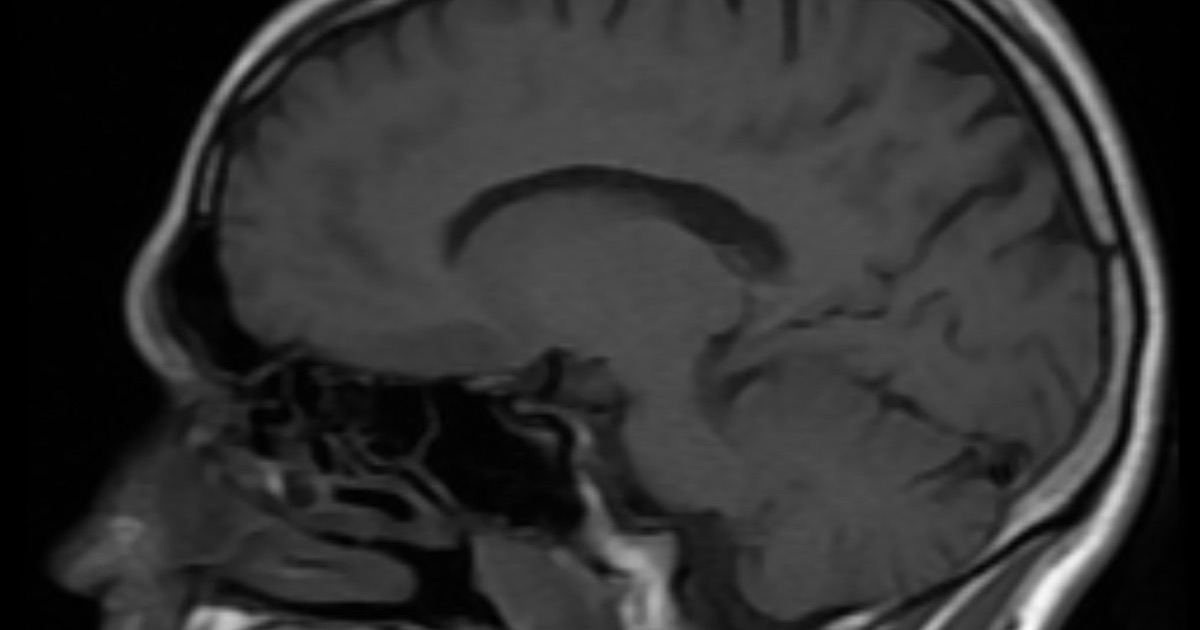
Neuroscientists are split over whether AI "foundation models" trained on brain recordings will reveal how the brain works, or only predict what it does. The question was laid out in a Dual Perspectives article published on 11 November 2026 in The Journal of Neuroscience, in which Bing Wen Brunton and Patrick Mineault take opposing sides, as reported by The Transmitter. It comes as well-funded teams put large sums into these models.
The bet on brain data
The approach borrows from large language models: train a neural network on huge amounts of data and expect it to keep getting better. According to The Transmitter, Meta, Stanford University, Neuralink and other groups have this year released or started building foundation models of human or mouse brains, and several teams are staking tens of millions of dollars on the idea.
In the new article, Brunton, a biology professor at the University of Washington, and Mineault, NeuroAI research lead at the Amaranth Foundation, debate two questions. Will models that predict brain activity well also help explain it? And does real understanding require modelling the body as well as the brain?
What the models have done so far
Supporters point to early results. A foundation model of the mouse visual cortex, described in a Nature study last year, predicted how neurons respond to coherent motion and noise, and predicted their cell types. It could also predict activity in new mice after seeing less than half an hour of their brain data.
Meta's TRIBE v2, built from more than 1,000 hours of brain scans, predicts fMRI responses to new stimuli in people it was not trained on, according to a May preprint. In April, Meta began a $15 million effort to build a model from 15,000 hours of high-precision fMRI scans. Meta told The Transmitter it could not comment.
Daniel Yamins of Stanford, who works on the Stanford Digital Brain Project, said accurate models could one day stand in for animals or people when testing new stimuli and treatments.
The case for optimism
Mineault argues that data-driven models are the more promising route. He says the best vision models trained on tasks such as object recognition explain only about half the variance in recordings from the inferotemporal cortex. Training directly on brain recordings, especially from intermediate visual areas such as V1, V2 and V4, could push a model's internal workings to become more brain-like.
He also points out that image-recognition networks improved sharply in 2012, yet it took researchers years to understand how they worked. In his view, prediction may be a step on the way to understanding.
Andreas Tolias of Stanford says predictions matter only if they lead to discoveries that can be checked in a real brain. An earlier model from his lab predicted that pupil dilation makes mouse visual neurons more sensitive to ultraviolet light, which experiments later confirmed.
The case for caution
Brunton says many different models can fit the same recordings, and nothing guarantees that a highly predictive model works the way a brain does. John Krakauer of Johns Hopkins University argues that even a model that did work like a brain would be "a second brain you have to neurally understand."
Yamins adds that better prediction does not mean a model has brain-like internal layers. He sees combining data-driven and task-trained models as ideal, but says nobody has worked out how.
Brunton also argues that intelligence belongs to a whole organism. Models without molecules and cells, she says, may struggle to predict how the brain responds to drugs. Mineault replies that for perception and thinking, the body's details may matter less.
Does more data always help?
Grace Lindsay of New York University says the gains from adding data suggest these models are still limited by how much data they have. Early studies give a more mixed picture, according to The Transmitter:
- A mouse model called OmniMouse, trained on more than 2.3 million neurons from 73 mice, improved with more data, but making the model bigger helped only up to a point.
- A 2025 study found that models decoding what a person sees improved with more recording hours per person, while adding more people barely helped.
- A May preprint found that three foundation models, including BrainLM, did worse than a simple linear connectivity model at predicting cognitive scores, and a larger version did worse than a smaller one.
Brunton says researchers need to learn how these models scale for each type of data to know how much is enough.
Where the two sides agree
Despite their differences, Brunton and Mineault reach similar next steps: measure as much as possible, then distil those measurements into principles of how the brain works. Mineault would start with large-scale recordings and detailed wiring maps of the brain, known as connectomes. Brunton welcomes "digital twins" of the brain as long as they have a body and include feedback, and says researchers must accept that the approach may not work.
The two planned to continue the debate at a live session at the Society for Neuroscience annual meeting in Washington, D.C., on Sunday, 15 November 2026.
This report is based on coverage by The Transmitter of the Dual Perspectives article.
Verified Sources & References
Think Today News verifies reporting against primary records, accredited institutions, and official data.
Spotted an error? Write to dileep@zentixservices.com. Read our corrections policy.