
Union Cabinet clears Delimitation Bill to freeze state seat shares until 2051 and expand Lok Sabha by 50%
The Constitution (132nd Amendment) Bill, 2026 proposes raising the Lok Sabha's maximum strength to 850 and extending the 1971 Census-based inter-state seat ratio for 25 years to implement women's reservation.

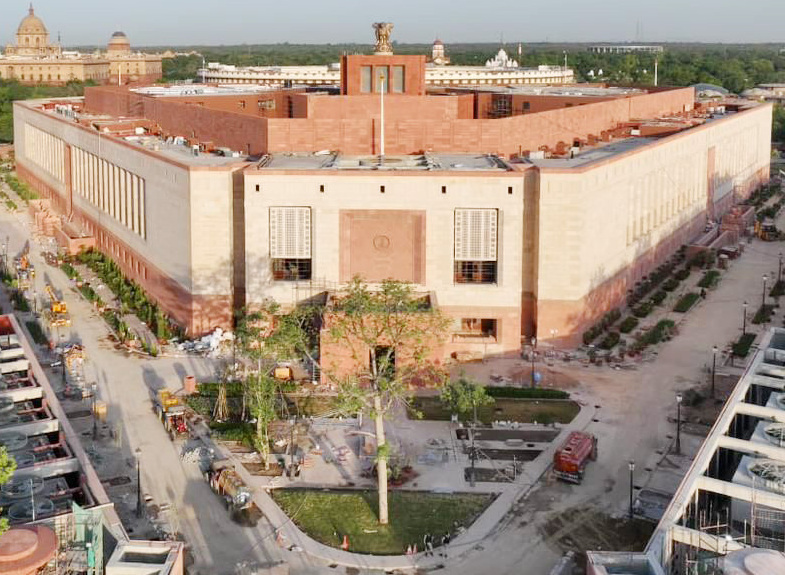
The Union Cabinet, chaired by Prime Minister Narendra Modi, on November 27, 2026, approved the Constitution (One Hundred and Thirty-second Amendment) Bill, 2026, alongside a companion Delimitation Bill and legislation for Union Territories. Scheduled for introduction during a four-day special sitting of Parliament beginning November 30, 2026, the legislative package seeks to extend the freeze on the inter-state distribution of Lok Sabha and State Assembly seats until 2051 while increasing total seat counts across every state and Union Territory by 50%.
The revised proposal marks a significant shift from the Constitution (131st Amendment) Bill, 2026, which failed to secure the required two-thirds majority in the Lok Sabha in April 2026—falling short by 54 votes—after Opposition parties objected to the absence of written guarantees protecting states' existing seat shares.
What the Constitution (132nd Amendment) Bill proposes
According to the Bill's Statement of Objects and Reasons, the primary goal is to give immediate effect to one-third (33%) reservation for women—including Scheduled Caste and Scheduled Tribe women—under Article 334A, enacted via the Nari Shakti Vandan Adhiniyam (106th Amendment) in 2023. Key provisions include:
- 25-year extension of the seat-share freeze: The Bill amends Articles 55, 81, 82, and 170 to replace the current sunset clause—which keeps inter-state seat proportions frozen until the first census published after 2026—with the fixed year 2051.
- 50% expansion of Lok Sabha and State Assemblies: Under amendments to Article 81, the maximum strength of the Lok Sabha will rise from 550 to 850—comprising up to 815 seats from states (up from 530) and 35 from Union Territories (up from 20). With the House currently at 543 elected members, a uniform 50% increase is expected to bring actual strength to roughly 815–816 seats.
- Higher Assembly ceiling for Uttar Pradesh: Amendments to Article 170(1) raise the upper limit for a State Legislative Assembly from 500 to 650 members while retaining the minimum of 60. This allows Uttar Pradesh, which currently has 403 Assembly seats, to expand past 600 constituencies without bifurcating the state.
- Redrawing boundaries using the 2011 Census: While inter-state seat ratios remain anchored to the 1971 Census, internal constituency boundaries and SC/ST seat allocations under Articles 82, 170, 330, and 332 will be redrawn using the "latest published census figures available" on the date the Act commences—effectively meaning the 2011 Census, as the ongoing census enumeration is not yet published.
- 15-year women's quota and Delimitation Commission: Women's reservation will take effect after this delimitation exercise—ahead of the 2029 general elections—and remain in force for 15 years from the 2023 Act's commencement, with seats rotating after subsequent delimitations. A companion Delimitation Bill establishes a three-member Delimitation Commission chaired by a serving or retired Supreme Court judge, alongside the Chief Election Commissioner (or a nominee) and the relevant State Election Commissioner, assisted by 10 non-voting MPs and MLAs per state.
Background: from the 1971 freeze to the 2026–2031 timeline
Under Article 82 and Article 170(3) of the Constitution, Parliament is required to readjust Lok Sabha and State Assembly seat allocations and constituency boundaries after every decennial census. However, during the Emergency in 1976, the 42nd Constitutional Amendment froze inter-state seat allocations at 1971 Census levels until after 2000 so that states successfully implementing family planning programmes would not lose parliamentary representation to faster-growing states.
In 2001, the 84th Constitutional Amendment extended this inter-state freeze until the first census published after 2026, while the 87th Amendment (2003) permitted the 2002 Delimitation Commission to redraw internal constituency boundaries based on the 2001 Census without altering total state seat counts.
With the delayed census exercise beginning in April 2026 and full results expected around 2027—and the next regular decennial cycle stretching toward 2031—the constitutional freeze was approaching expiration. Demographic divergence sharpened the North–South debate: states such as Kerala and Tamil Nadu lowered Total Fertility Rates to around 1.8, whereas northern states like Bihar (3.0) and Uttar Pradesh (2.4) recorded higher population growth. By locking in existing state ratios until 2051 and expanding every state's seats by 50%, the Centre aims to neutralise southern fears of losing representation—such as Tamil Nadu's insistence on protecting its 7.18% share of 39 Lok Sabha seats.
Opposition response and shifting parliamentary arithmetic
The revised Bill has reshaped alignments across the political spectrum. While the ruling National Democratic Alliance (NDA) needs roughly 360 votes for a two-thirds majority in the Lok Sabha under Article 368, signals of support from the NCP (Sharadchandra Pawar) (8 MPs), DMK (22 MPs), and YSRCP (4 MPs), alongside NDA ally TDP, have placed the government within reach of passage.
Still, the Congress, Samajwadi Party (SP), and Left parties have mounted a sharp challenge ahead of an INDIA bloc strategy meeting on November 28. Following a Congress Parliamentary Strategy Group meeting on November 27, Leader of the Opposition Rahul Gandhi vowed to fight the Bill "tooth and nail," while senior Congress leaders warned that allies backing the legislation could prompt a reassessment of INDIA bloc ties.
Opposition objections centre on four issues:
- Fears of gerrymandering: Congress deputy leader Gaurav Gogoi and other leaders argued that redrawing boundaries across 815 constituencies risks politically motivated gerrymandering, pointing to earlier delimitation exercises in Jammu and Kashmir (2022) and Assam (2023).
- Delinking women's reservation: Congress General Secretary Jairam Ramesh contended that the 2023 women's quota law should be implemented immediately within the existing 543-seat Lok Sabha rather than being tied to a fresh delimitation.
- Commission independence and caste census: Critics questioned the Centre's authority to appoint the Delimitation Commission chairperson without consulting the Chief Justice of India, while SP chief Akhilesh Yadav—whose party issued a whip to its 37 Lok Sabha and 5 Rajya Sabha MPs—accused the BJP of timing the push for the upcoming Uttar Pradesh Assembly polls and ignoring demands for an OBC women's sub-quota and caste census data.
- Bicameral imbalance: Congress MP Shashi Tharoor warned that expanding the Lok Sabha to 850 without enlarging the 250-seat Rajya Sabha would disproportionately diminish the Upper House's weight in joint sittings and presidential elections.
Meanwhile, NCP (SP) working president Supriya Sule noted her party wants Opposition representation on the Delimitation Commission, and the Trinamool Congress (TMC) has challenged the eligibility of rebel MPs to vote amid a pending defection case.
Why it matters
If passed during the November 30–December 3 special sitting, the Constitution (132nd Amendment) Bill will trigger the largest expansion of India's Parliament and state legislatures since Independence, directly shaping the 2029 general elections through the rollout of 33% women's reservation. By extending the 1971 inter-state ratio freeze until 2051, the government has sought to defuse a long-simmering North–South federal dispute—yet the debate now shifts to how internal constituency boundaries are redrawn, who oversees the Delimitation Commission, and how an enlarged Lok Sabha alters India's bicameral balance.
Verified Sources & References
Think Today News verifies reporting against primary records, accredited institutions, and official data.
Spotted an error? Write to dileep@zentixservices.com. Read our corrections policy.