
India announces ₹15,000 crore package, offshore IIT campus, and Ayodhya–Janakpur train during Nepal PM Balendra Shah's visit
New Delhi and Kathmandu have adopted a 'Viksit Bharat and Samunnat Nepal' joint vision, pairing a ₹15,000 crore development package with an offshore IIT campus, the Sarayu–Kamala Express rail link, and eight bilateral agreements.

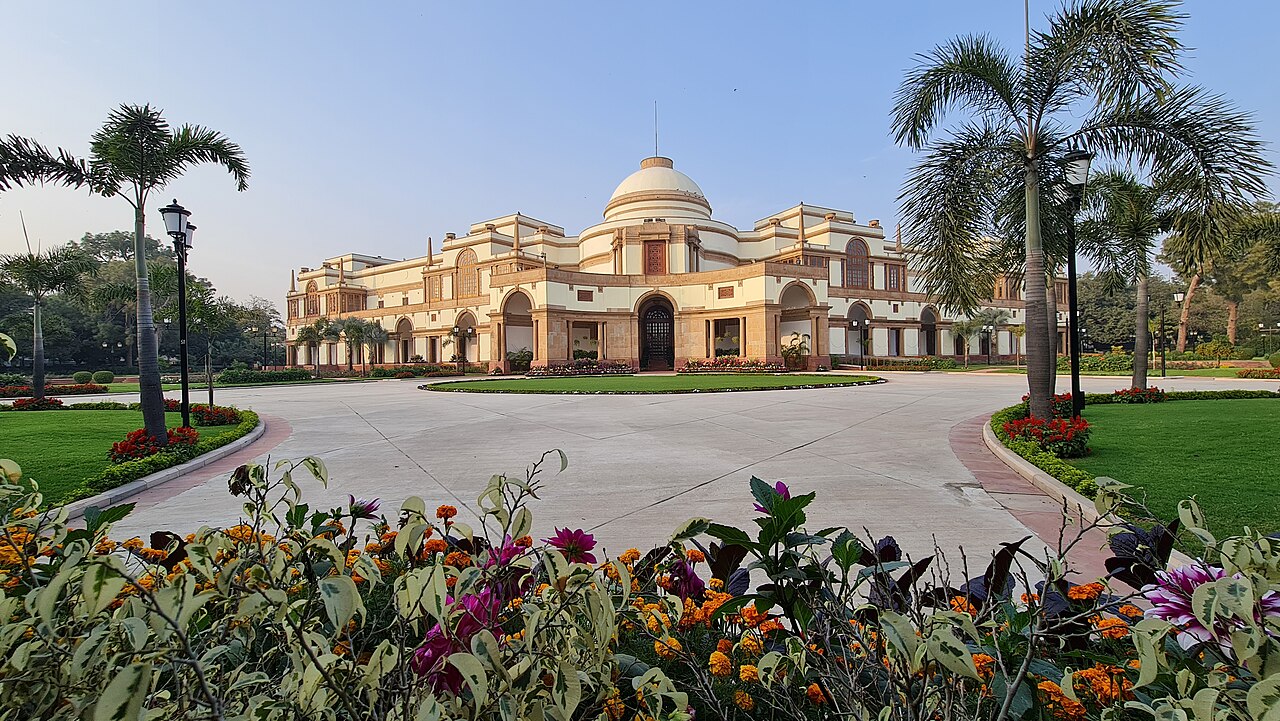
India has unveiled a ₹15,000 crore (24,000 crore Nepali rupees) development assistance package for Nepal alongside major education, rail, energy, and trade initiatives during Nepalese Prime Minister Balendra Shah's two-day State Visit to New Delhi on November 22–23, 2026. Following delegation-level talks at Hyderabad House on November 23, Prime Minister Narendra Modi and Prime Minister Shah launched the Sarayu–Kamala Express connecting Ayodhya and Janakpur, announced plans for an offshore Indian Institute of Technology (IIT) campus in Nepal, and exchanged eight Memoranda of Understanding (MoUs) spanning space technology, policing, healthcare, and governance, according to the Ministry of External Affairs (MEA).
During his first bilateral trip abroad since assuming office in March 2026, Shah received a ceremonial welcome at Rashtrapati Bhavan, paid floral tributes at Rajghat, and called on President Droupadi Murmu, while External Affairs Minister Dr. S. Jaishankar also met the visiting leader, the Prime Minister's Office (PMINDIA) confirmed.
₹15,000 crore aid package and reconstruction support
A central pillar of the summit is India's ₹15,000 crore (NPR 24,000 crore) financial package, structured to address both immediate disaster recovery and long-term energy infrastructure. According to the MEA Joint Press Release, the package comprises:
- ₹3,500 crore (NPR 5,600 crore) in grant assistance dedicated to post-disaster reconstruction and new infrastructure projects, following the destructive Rasuwa–Bhotekoshi flash floods that hit Nepal in August 2026.
- ₹11,500 crore (NPR 18,400 crore) as a Rupee-denominated Line of Credit earmarked for energy sector projects.
India will also fund an Agro-Industrial Park in Chitwan through grant assistance to boost food processing and agricultural value addition, as reported by The Indian Express. Emphasising New Delhi's Neighbourhood First approach, Modi noted that India had maintained steady supplies of fuel, fertilisers, and essential goods to Nepal despite global oil supply disruptions this year. Describing the bilateral relationship as one of "kinship and unbreakable trust," Modi added, "Our joys are shared, and so are our challenges. We are partners in each other's progress and a source of support for each other in difficult times."
Offshore IIT campus, innovation hub, and youth cooperation
Expanding academic and technological ties, both governments agreed to establish an offshore IIT campus in Nepal, complemented by a start-up incubator and an innovation hub, per The Indian Express. India will also broaden scholarship opportunities in law and technology for Nepalese students.
Prime Minister Shah welcomed Indian investors and framed the educational initiative as a two-way bridge for young talent. "In the coming days, we should foster an environment where Indian students come to study at an IIT established in Nepal while expanding direct air connectivity between cities of both countries for the convenience of our citizens," Shah said.
Sarayu–Kamala Express links Ayodhya and Janakpur
To deepen people-to-people and cultural connectivity along the Ramayana Circuit, the two Prime Ministers virtually flagged off the inaugural Sarayu–Kamala Express between Ayodhya in Uttar Pradesh and Janakpur Dham in Nepal. According to the Press Information Bureau (PIB) and The Times of India, the 604-kilometre route takes roughly 19 hours and features commercial stoppages at Jaynagar, Madhubani, Shisho, Sitamarhi, Raxaul, Narkatiaganj, Gorakhpur, Basti, Mankapur, and Ayodhya Dham.
While the inaugural service ran as special train No. 04295 from Ayodhya Dham on November 23, regular weekly operations begin on November 28, departing Janakpur Dham on Saturdays and Ayodhya Cantt. on Mondays. Both leaders also agreed to explore similar rail links for Buddhist and Shiv–Shakti tourism circuits.
Border infrastructure, energy projects, and eight MoUs
Beyond rail tourism, the leaders announced significant upgrades across trade, energy, and border logistics under the "Viksit Bharat and Samunnat Nepal" joint vision:
- Trade, ports, and aviation: India opened transit trade access for landlocked Nepal through Deendayal Port (Kandla, Gujarat), with Paradip Port (Odisha) to follow once infrastructure is ready. Both sides also agreed to make the unidirectional B345 Kathmandu–Bhairahawa–Lucknow air route bidirectional.
- Cross-border rail and roads: The two countries finalised the Field Location Survey for the Raxaul–Kathmandu electrified broad-gauge rail line, committed to collaborating on Nepal's East–West Railway, inaugurated the Dharchula–Darchula motorable bridge, and laid the foundation stone for a new Integrated Check Post (ICP) at Banbasa in Uttarakhand.
- Hydropower and pipelines: Modi and Shah laid the virtual foundation stone for the 669 MW Lower Arun Hydro-Electric Project, dedicated Phase II of the Motihari–Amlekhgunj petroleum pipeline, and initiated work on a petroleum terminal at Jhapa for the proposed Siliguri–Jhapa pipeline. They also directed officials to expedite Detailed Project Reports for the Pancheshwar, Saptakoshi, and Sunkoshi multipurpose water projects.
The eight MoUs signed during the visit cover a Satellite Communication (SATCOM) network between ISRO and Nepal's Ministry of Information and Communication, forensic and policing collaborations involving Gujarat's National Forensic Sciences University and Rashtriya Raksha University, civil servant training via the National Centre for Good Governance, Ayurveda, healthcare, sustainable urban development, and livestock and fisheries.
Background context
Nepal's political landscape shifted markedly in March 2026 when Balendra Shah, a former Kathmandu mayor, assumed the premiership. His maiden state visit to New Delhi carried strategic weight for both capitals, signalling continuity in economic and security ties while introducing a modernised agenda focused on start-ups, digital connectivity, climate resilience, and higher education. "The ties between Nepal and India stand as firm as the Himalayas and as vast as the ocean," Shah said, noting that India has consistently acted as a "first responder" during natural disasters.
Why it matters
For citizens and businesses on both sides of the open border, the November 23 announcements translate high-level diplomacy into tangible economic and daily-life gains. The ₹3,500 crore grant directly aids communities recovering from the August 2026 floods, while the ₹11,500 crore energy credit line and cross-border transmission links strengthen regional power security. For pilgrims, traders, and families across Uttar Pradesh, Bihar, and Nepal's Madhesh province, the direct Ayodhya–Janakpur train removes the hassle of border train transfers and stimulates local hospitality economies. Meanwhile, opening Kandla and Paradip ports lowers logistics costs for Nepalese trade, and an offshore IIT campus promises to anchor high-skill engineering talent within South Asia. Modi's acceptance of Shah's invitation to visit Nepal ensures sustained diplomatic momentum into 2027.
Verified Sources & References
Think Today News verifies reporting against primary records, accredited institutions, and official data.
Spotted an error? Write to dileep@zentixservices.com. Read our corrections policy.