
US FCC grants SpaceX conditional approval for 1 million 'Starmind' orbital AI data center satellites
The U.S. Federal Communications Commission has issued its first-ever authorization for space-based data centers, allowing SpaceX to deploy up to 1 million solar-powered compute satellites by 2040 under strict orbital debris and spectrum conditions.

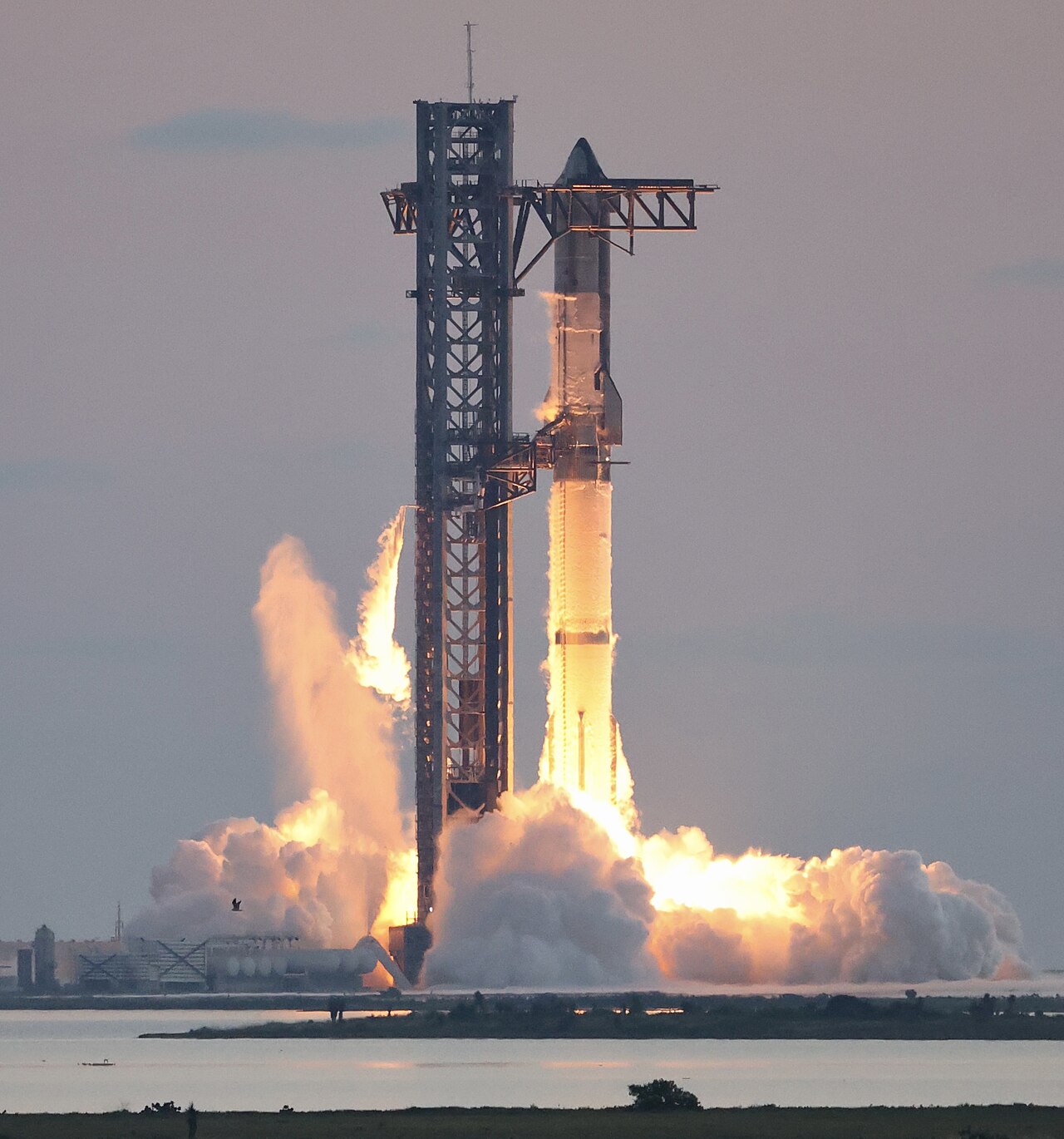
On November 25, 2026, the U.S. Federal Communications Commission (FCC) Space Bureau granted conditional approval to SpaceX to deploy and operate a constellation of up to 1 million satellites—named Starmind—designed to function as orbital artificial intelligence (AI) data centers, according to the FCC Memorandum Opinion and Order (DA 26-1273). While the FCC news release hailed the decision as the first authorization in U.S. history for a constellation of data centers in space, the order stops short of an unconditional green light, deferring SpaceX's end-of-life disposal plans for higher orbits and imposing strict deployment deadlines through 2040.
What the FCC authorized: orbits, spectrum, and deadlines
SpaceX's Space Exploration Holdings, LLC originally filed its application on January 30, 2026, seeking permission for an orbital data center network operating in low-Earth orbit (LEO). Under the November 25 grant, the FCC authorized the constellation across 50-kilometer orbital shells at altitudes ranging from 500 kilometers to 1,002 kilometers, spanning 30-degree and sun-synchronous inclinations.
Rather than relying on traditional radio waves for primary data traffic, Starmind satellites will use optical inter-satellite laser links to communicate with one another and route processed data back to Earth via SpaceX's first- and second-generation Starlink networks, as reported by TechCrunch. The FCC's spectrum authorization covers backup and emergency telemetry, tracking, and command (TT&C) in the Ka-band—specifically 18.8–19.3 GHz (space-to-Earth) and 28.6–29.1 GHz (Earth-to-space)—strictly on an unprotected, non-interference basis, requiring ongoing coordination with U.S. federal agencies.
To prevent spectrum warehousing while accommodating next-generation launch timelines, the FCC waived its legacy surety bond rules and applied updated deployment milestones. SpaceX's 15-year license will become void if it misses any of the following targets listed in FCC Order DA 26-1273:
- November 25, 2033: First operational Starmind satellite placed in its assigned orbit.
- November 25, 2035: 10% of the authorized constellation (100,000 satellites) operational.
- November 25, 2038: 50% of the authorized constellation (500,000 satellites) operational.
- November 25, 2040: Full constellation (1,000,000 satellites) deployed and operating.
SpaceX has indicated it aims to move much faster than the regulatory floor, targeting initial launches aboard its reusable Starship megarocket as early as the third quarter of 2027, according to Space.com and Mashable.
Why move AI data centers into orbit?
The push toward orbital computing is driven by physical bottlenecks on Earth. Training and running frontier AI models requires massive electrical power, vast land footprints, and millions of gallons of water for cooling—pressures that have strained regional power grids and sparked local opposition to terrestrial facilities, as noted by The Guardian.
By placing compute modules in sun-synchronous orbits, satellites can capture near-continuous solar energy without relying on terrestrial power grids or local zoning approvals. FCC Chairman Brendan Carr framed the approval as a strategic milestone for U.S. "super intelligence" (SI) infrastructure, stating in the FCC release that the decision "opens a bold new frontier for the computing infrastructure needed to power America's leadership and growth."
SpaceX is not alone in chasing orbital compute. Space.com and Mashable note that Google, Blue Origin, Starcloud, and Cowboy Space are all pursuing space-based data centers. In October 2026, Google launched a prototype AI satellite under its Project Suncatcher initiative aboard a SpaceX rocket and successfully ran an AI model in orbit, while Starcloud has also deployed an early pathfinder spacecraft.
Engineering, debris, and astronomy hurdles
Despite the regulatory win, substantial technical and regulatory obstacles remain before Starmind can scale. A July 2026 U.S. Government Accountability Office (GAO) spotlight on space-based data centers warned that shedding waste heat from high-powered processors is far harder in the vacuum of space than in Earth's atmosphere, requiring large deployable radiators, radiation-hardened electronics, and significantly lower launch costs.
Scale is another major question mark. Since 1957, humanity has launched roughly 28,000 satellites in total, and about 17,000 currently operate in orbit—more than 11,000 of them belonging to SpaceX's Starlink network. Rival satellite operator Kuiper Systems (Amazon Leo) formally petitioned the FCC to deny SpaceX's application, calling it a "lofty ambition rather than a real plan" that could take centuries to deploy, according to TechCrunch.
The FCC rejected petitions to deny from Amazon Leo, Viasat, and the American Astronomical Society (AAS), ruling that optical astronomy and broader environmental impacts fall outside the agency's statutory remit while pointing to SpaceX's commitment to coordinate with the National Science Foundation. Still, astronomers remain alarmed: preliminary AAS simulations cited by Mashable suggest that if 1 million satellites were deployed, tens of thousands could be visible to the naked eye worldwide and interfere with telescope observations.
Meanwhile, the FCC order approved SpaceX's orbital debris plan only for satellites below 600 kilometers; it deferred SpaceX's request to move retired satellites above 600 kilometers into disposal or heliocentric orbits instead of atmospheric re-entry, barring deployments above 600 kilometers until SpaceX submits a complete, compliant debris mitigation modification.
Why it matters
For the global technology sector, the FCC's Starmind ruling establishes the first formal U.S. regulatory framework for treating outer space as an extension of cloud and AI infrastructure. Even if SpaceX never reaches the 1-million-satellite ceiling—a figure operators often request to preserve engineering flexibility—the authorization signals that U.S. regulators are willing to adapt spectrum and licensing rules for non-communications space platforms.
At the same time, the decision sharpens international debate over orbital congestion and space sustainability. With SpaceX required to file semi-annual reports on collision-avoidance maneuvers and deorbiting, and with its higher-altitude disposal plans still under review, Starmind will test whether existing national licensing rules and international space treaties can manage mega-constellations orders of magnitude larger than anything currently in orbit.
Verified Sources & References
Think Today News verifies reporting against primary records, accredited institutions, and official data.
Spotted an error? Write to dileep@zentixservices.com. Read our corrections policy.