
Nvidia reinstates Jensen Huang as CEO after 11-day absence, sending shares up 32%
Nvidia's board voted unanimously on November 23 to restore co-founder Jensen Huang as president, chief executive, and director following input from senior US officials, reversing an 11-day leadership shakeup and restoring $950 billion in market value.

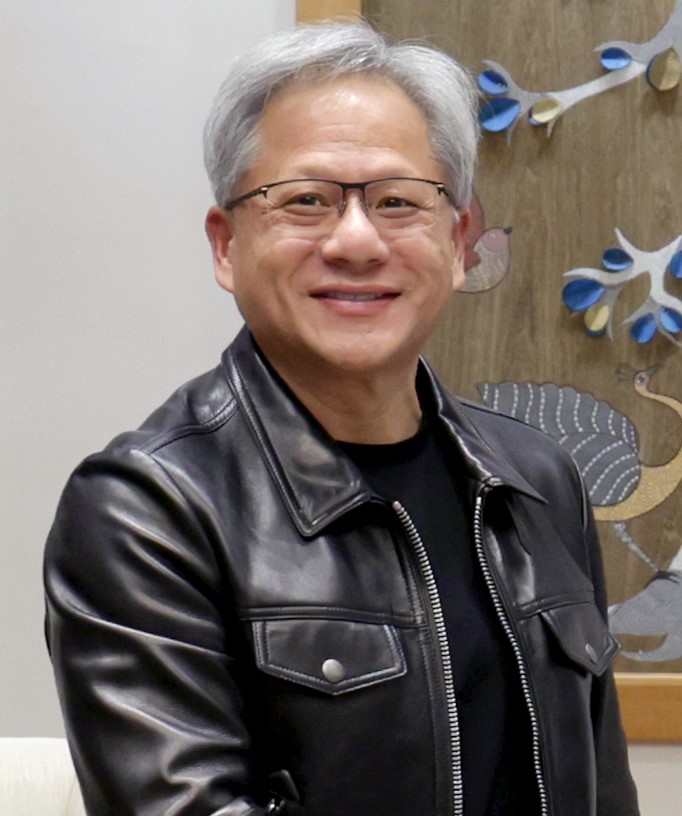
Nvidia Corporation announced on Monday, November 23, 2026, that Jensen Huang has returned as president, chief executive officer, and board member with immediate effect, reversing a leadership shake-up that had rattled global artificial intelligence markets for nearly two weeks.
In a regulatory filing with the US Securities and Exchange Commission, the Santa Clara-based chipmaker said its board reached the unanimous decision after direct discussions with Huang and consultations with senior US government officials, concluding that his return poses no national security risk.
Chief Financial Officer Colette Kress, who stepped in as interim CEO during Huang's absence, will resume her full-time focus as CFO, while Harvey C. Jones remains board chair. The announcement triggered an immediate rally on Wall Street, lifting Nvidia's stock by roughly 32% to close at $165.05 and restoring roughly $950 billion in market value in a single trading session.
What led to the reversal
Huang had stepped down on November 12 following media reports detailing personal relationships, including one with Alice Huang (no relation), a former executive at Singapore-based technology firm Megaspeed whom US authorities suspect of having ties to Chinese intelligence. Beijing has denied the espionage allegations.
In the days after Huang's departure, Nvidia's share price fell by roughly 25%, dragging down broader AI-linked equities as investors worried about leadership continuity at the world's dominant supplier of AI accelerators. At the same time, an open petition urging the board to bring Huang back gathered more than 180,000 signatures, including public support from Tesla and SpaceX CEO Elon Musk.
Potential external successors also proved unavailable: Arm Holdings CEO Rene Haas, who had reportedly been approached about the role, signed a new agreement keeping him at Arm through 2033.
US President Donald Trump publicly backed Huang's return, stating on Monday that he had spoken with Nvidia's board and helped broker the outcome, while Vice President JD Vance also participated in discussions among the White House, Huang, and the company. Trump wrote on social media that the US government had no evidence Huang engaged in unlawful conduct or posed a security risk.
New governance safeguards and ongoing probes
Despite restoring Huang to the helm, Nvidia's board made clear that oversight measures introduced during his absence will remain in place:
- Independent investigation: A special committee of independent directors, assisted by outside counsel, is continuing its inquiry into reports that Huang was targeted by a foreign intelligence effort. Nvidia said Huang supports the review and is cooperating fully.
- Export Control Committee: Established on November 17, a dedicated National Security and Export Control Oversight Committee composed solely of independent directors is engaging specialized national security counsel and advisors to monitor trade compliance.
- Chief Compliance Officer: The company has initiated a search for a new Chief Compliance Officer who will oversee compliance across all operations and report directly to the Nominating and Corporate Governance Committee.
External scrutiny is also intensifying. On the same day Nvidia reinstated Huang, the US government placed Singapore-based Megaspeed on a federal trade blacklist, barring American firms from exporting advanced chips or technology to the company amid an investigation into suspected semiconductor diversion to China.
Separate inquiries by the SEC, the US Department of Justice, and the state of California remain active, and Huang is scheduled to testify before Congress on December 1. Democratic Senator Elizabeth Warren criticized the board's decision as "reckless," arguing that Nvidia still owes lawmakers answers on export-control compliance.
Market ripple effects across the AI sector
Nvidia's rebound lifted broader US equity benchmarks on Monday, with the Nasdaq Composite climbing 6.5% and the S&P 500 advancing 4.7%. The rally offered relief to an AI sector that had faced heightened volatility following recent US midterm elections—where voters in 10 states rejected data-center ballot measures—and a post-IPO pullback in shares of AI developer Anthropic, in which Nvidia holds a $10 billion IPO commitment alongside an earlier $10 billion investment.
Market analysts compared Huang's rapid return to OpenAI's reinstatement of chief executive Sam Altman in November 2023, noting that both episodes highlight how tightly investor confidence in major AI platforms remains tied to individual founders.
Why it matters
For global technology firms, cloud providers, and retail investors, Nvidia's 11-day leadership crisis underscores two realities shaping the AI economy in late 2026:
- Key-person dependency in AI infrastructure: Nvidia's GPUs and software ecosystem underpin data centers worldwide, including AI computing buildouts in India and across Asia. A single leadership change erased roughly a quarter of the company's valuation in days—and reversing it restored nearly $1 trillion—showing that succession planning and board governance at foundational chipmakers carry systemic market risk.
- Tighter export compliance for global supply chains: Even with Huang back in charge, the creation of Nvidia's National Security and Export Control Oversight Committee and the blacklisting of Megaspeed signal stricter vetting of cross-border AI chip shipments. Data-center operators, enterprise buyers, and semiconductor distributors outside the United States should expect more rigorous end-user verification and compliance checks ahead of Huang's December 1 congressional testimony.
Verified Sources & References
Think Today News verifies reporting against primary records, accredited institutions, and official data.
Spotted an error? Write to dileep@zentixservices.com. Read our corrections policy.