
Indian aviation fleet expansion: how mega aircraft orders by Air India and IndiGo are reshaping regional connectivity
With over 1,500 commercial aircraft on order, Indian carriers are transforming domestic airspace, launching non-stop tier-2 international routes, and building dual mega-hubs in Delhi and Mumbai.

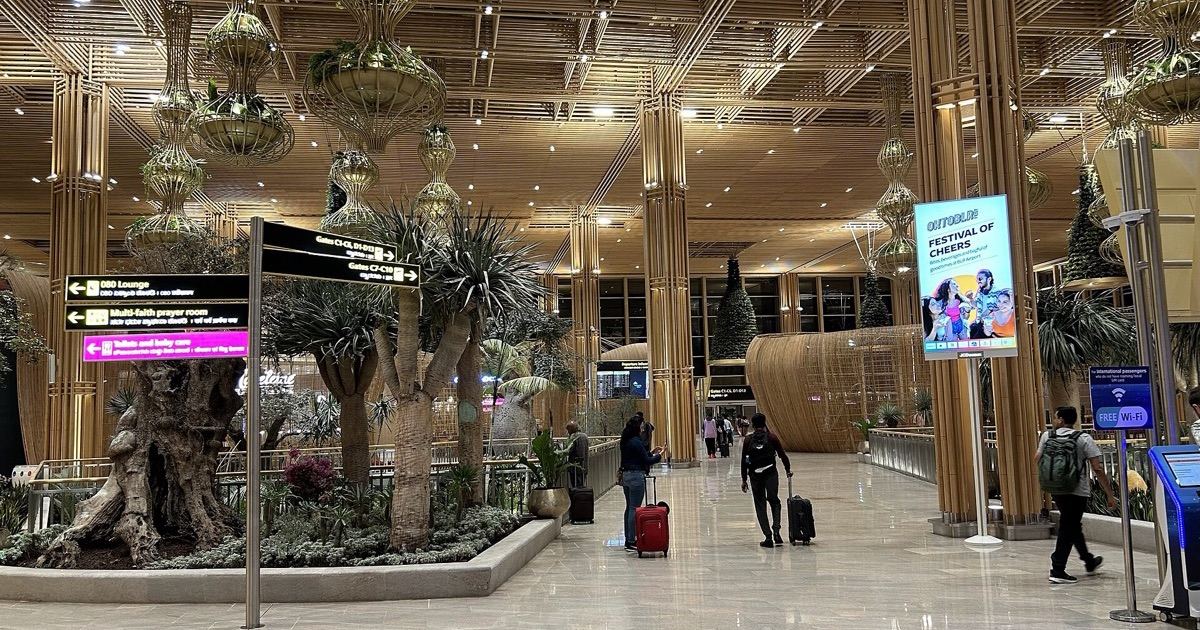
India's commercial aviation sector is experiencing the most capital-intensive expansion in global civil aviation history. Led by historic aircraft purchase orders placed by market leader IndiGo (over 1,000 aircraft on order) and the revitalised Air India Group under Tata ownership (over 470 aircraft on order), domestic airlines have committed hundreds of billions of dollars to modernise and triple the country's commercial fleet over the coming decade.
The scale of this fleet infusion is fundamentally altering airline network topology, accelerating tier-2 regional connectivity, and establishing India as an international transit hub rivaling traditional Gulf hubs.
The dual airline duopoly: IndiGo and Air India
Combined, IndiGo and the Air India group (incorporating Air India Express) control over 90 per cent of the domestic passenger market:
- IndiGo's scale and widebody evolution: Renowned as a low-cost, point-to-point single-aisle carrier (A320neo family), IndiGo's recent order of Airbus A350-900 widebody jets signals its ambition to launch long-haul direct flights connecting major Indian metros with European and Asian hubs.
- Air India's full-service revival: Supported by an extensive cabin retrofit programme, fleet integration, and long-range Boeing 777 and Airbus A350 deliveries, Air India is actively targeting premium business travel, non-stop trans-Pacific routes, and cross-continental transfer traffic.
Expanding beyond Tier-1 metros: the UDAN effect
While Delhi's Indira Gandhi International Airport and Mumbai's Chhatrapati Shivaji Maharaj International Airport undergo major capacity expansions (including the operational rollout of Noida International Airport at Jewar and Navi Mumbai International Airport), the fastest passenger growth rates are occurring in Tier-2 and Tier-3 cities.
Under the regional connectivity scheme UDAN (Ude Desh ka Aam Nagrik), new operational airports—such as Darbhanga, Jharsuguda, Ayodhya, and Shivamogga—have demonstrated sustained passenger load factors exceeding 80 per cent, proving that regional air travel demand has permanently outgrown historical reliance on trunk metro corridors.
Verified Sources & References
Think Today News verifies reporting against primary records, accredited institutions, and official data.
Spotted an error? Write to dileep@zentixservices.com. Read our corrections policy.