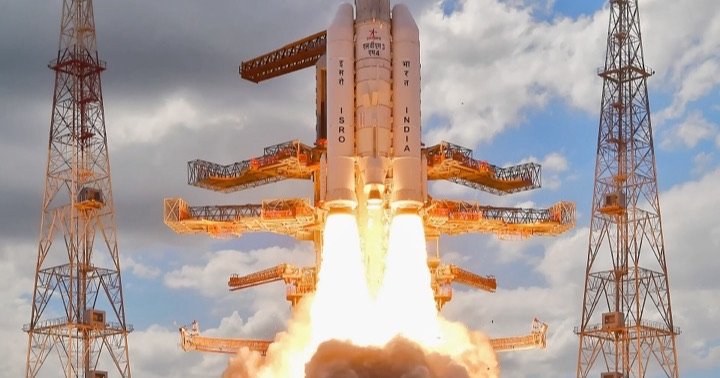

ISRO puts NVS-03 navigation satellite in orbit; first engine burn done as NavIC gets a third new-generation satellite
GSLV-F18 lifted off from Sriharikota at 11:51 pm on 30 October and placed the 2,250 kg NVS-03 in a transfer orbit. ISRO completed the first orbit-raising burn the next afternoon.
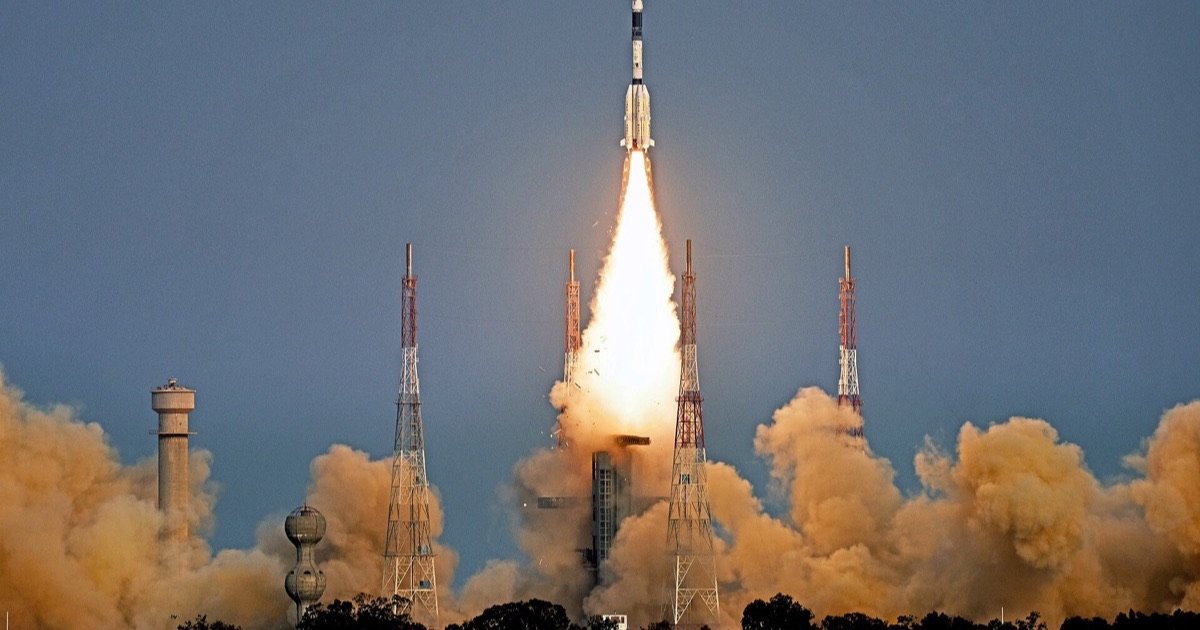
India's regional navigation system has a new satellite on its way to its parking spot. ISRO's GSLV-F18 rocket lifted off from the Satish Dhawan Space Centre in Sriharikota at 11:51 pm on Friday, 30 October, and placed the NVS-03 satellite in a geosynchronous transfer orbit, according to a government backgrounder issued on Sunday morning.
The satellite fired its own engine for the first time at 4:48 pm on Saturday, 31 October, the first of several burns that will lift it to its working position over the equator at 111.75 degrees East.
That first burn matters more than usual this time. The previous satellite in the series, NVS-02, reached orbit in January 2025 but never got to its slot, because valves that feed oxidiser to its engine did not open.
What was launched
NVS-03 is the third of five second-generation satellites (NVS-01 to NVS-05) being built to keep NavIC, India's own satellite navigation system, running and to improve it. The government's backgrounder lists these details:
- Mass: about 2,250 kg at lift-off.
- Signals: navigation payloads in the L1, L5 and S frequency bands.
- Clocks: an atomic clock developed in India, alongside atomic clocks bought from abroad.
- Coverage: India's landmass and an area extending about 1,500 km beyond its borders.
The rocket was the 20th GSLV to fly. GSLV-F18 stands about 50 metres tall and weighed around 420 tonnes at lift-off. Its top stage runs on liquid hydrogen and liquid oxygen and is built in India; early GSLV flights used a cryogenic stage supplied by Russia.
Why a transfer orbit first
A rocket rarely drops a satellite straight into its final high orbit. Instead, it leaves it in a stretched, oval path called a geosynchronous transfer orbit, which swings close to Earth at one end and out to about 35,786 km at the other.
The satellite then does the rest of the work itself. Each time it reaches the far point of that oval, it fires an onboard engine (on NVS-03, a liquid apogee motor) to raise the near point and gradually turn the oval into a circle. More burns may follow to fine-tune its tilt and position. Our explainer on how ISRO launches a satellite walks through the stages of a launch in more detail.
What NavIC does
NavIC, short for Navigation with Indian Constellation, was earlier called the Indian Regional Navigation Satellite System. Like America's GPS, it tells a receiver where it is, how fast it is moving and what time it is, by measuring how long signals take to arrive from several satellites at once.
There are two important differences. GPS covers the whole world; NavIC covers only India and the surrounding region. And NavIC is run by India, so the country does not have to rely on a foreign system for navigation and timing in a crisis.
It offers two services:
- Standard Positioning Service: open to anyone, and designed to work alongside GPS, Russia's Glonass, Europe's Galileo and China's BeiDou.
- Restricted Service: encrypted, and only for authorised strategic users.
The system was designed around seven satellites, three in geostationary orbit and four in inclined geosynchronous orbits, supported by ground stations that run round the clock. The NVS series is meant to add to that constellation and replace older satellites as they age.
Why the L1 signal matters for your phone
The first-generation NavIC satellites broadcast on the L5 and S bands. The new series adds L1, the band that GPS and most other systems use for their main civilian signal.
That is a practical change. Many smartphone and car navigation chips are built around L1, so a NavIC signal in that band is easier for manufacturers to support. The backgrounder says the use of several bands also lets receiver makers design devices for different uses and conditions. Whether a particular phone uses NavIC still depends on its chip and software.
The government lists transport, shipping, aviation, disaster management, precision farming and strategic services among the uses of NavIC's positioning and timing data. Accurate timing is less visible but just as important: power grids, telecom networks and banking systems all depend on precise time signals.
The series so far
- NVS-01: launched on 29 May 2023 on GSLV-F12, with a 12-year mission life and an Indian-made rubidium atomic clock from the Space Applications Centre, Ahmedabad.
- NVS-02: launched on 29 January 2025 on GSLV-F15. It could not be raised to its intended orbit after the oxidiser valves failed to open.
- NVS-03: launched on 30 October 2026 on GSLV-F18. First orbit-raising burn completed on 31 October.
- NVS-04 and NVS-05: in the pipeline, with the same three signal bands.
Prime Minister Narendra Modi congratulated ISRO on Saturday morning, calling the mission an important step in strengthening NavIC.
The next milestones are the remaining orbit-raising burns and the satellite's arrival at 111.75 degrees East, followed by testing of its navigation payload before it can start serving users. ISRO has not yet given a date for when NVS-03 will enter service.
Sources
Spotted an error? Write to dileep@zentixservices.com. Read our corrections policy.