
How ISRO puts a satellite into orbit: rockets, launch windows and orbits explained
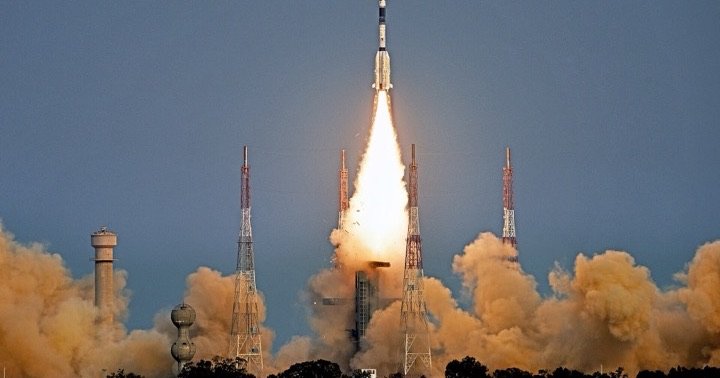
ISRO uses PSLV for lighter satellites in low orbits, GSLV and LVM3 for heavier ones going higher. Between countdown and orbit, each rocket drops its stages one by one.
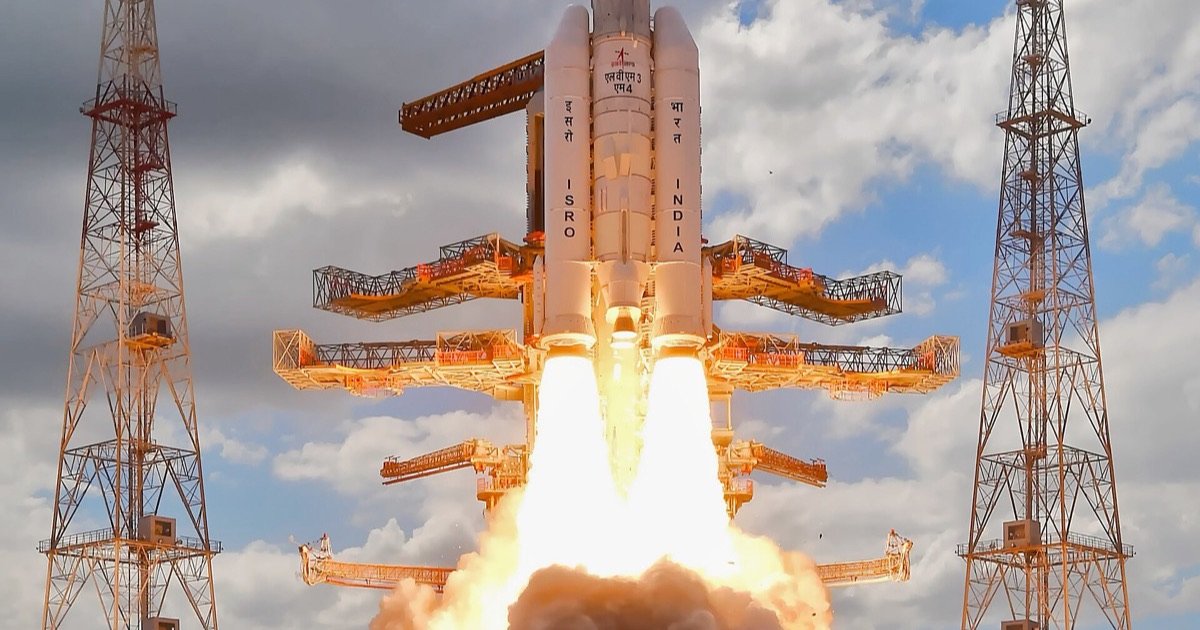
The Indian Space Research Organisation (ISRO) launches its rockets from the Satish Dhawan Space Centre at Sriharikota, an island on the coast of Andhra Pradesh. The site's location on the east coast lets rockets fly eastward over the sea, gaining a boost from Earth's rotation while keeping populated areas out of the flight path.
Three workhorse rockets
PSLV (Polar Satellite Launch Vehicle). ISRO's most-flown rocket. It is often used to place earth-observation satellites into sun-synchronous polar orbits, where a satellite passes over each place at roughly the same local time every day. That makes it useful for imaging and mapping. PSLV also launched Chandrayaan-1 and the Mars Orbiter Mission.
GSLV (Geosynchronous Satellite Launch Vehicle). Built to send heavier satellites toward geosynchronous transfer orbit, the path used to reach the high orbit where communication satellites sit. Its upper stage uses a cryogenic engine running on liquid hydrogen and liquid oxygen, technology India developed itself.
LVM3. ISRO's heaviest rocket, formerly called GSLV Mk III. It launched Chandrayaan-3 in July 2023 and has carried commercial satellites in large batches. A human-rated version is being developed for the Gaganyaan human spaceflight programme.
Why a rocket has stages
A rocket carries its fuel with it, and most of its weight at lift-off is propellant. Rockets are built in stages so that empty tanks and engines can be dropped once their fuel is spent. Each lighter stage then accelerates more efficiently. ISRO's rockets mix solid stages (fuel and oxidiser packed together), liquid stages, and, on GSLV and LVM3, cryogenic stages.
Launch windows
A launch window is the period in which a rocket must lift off to reach the right orbit. For a satellite joining a specific orbit, or a spacecraft heading to the Moon, the window can be very short. Weather, technical checks and range safety can all cause a launch to slip to the next window.
From countdown to orbit
- The countdown runs for many hours as propellants are loaded and systems checked.
- At lift-off, the first stage and any strap-on boosters fire.
- The heat shield protecting the satellite is jettisoned once the rocket is high enough that air friction is no longer a danger.
- Stages separate and the next ones ignite in sequence.
- The final stage reaches the planned orbit and releases the satellite.
- Ground stations acquire the satellite's signals, and controllers take over.
The Moon landing that put India on the map
On 23 August 2023, Chandrayaan-3's Vikram lander touched down near the Moon's south polar region, making India the first country to land there and the fourth to achieve a soft landing on the Moon. India now marks 23 August as National Space Day.
Orbits, explained
Where a satellite goes depends on its job:
- Low Earth orbit (LEO), a few hundred to about 2,000 km up, is used for earth observation and space stations. Satellites here circle the Earth roughly every 90 to 120 minutes.
- Sun-synchronous orbit, a kind of polar LEO, keeps lighting conditions constant over each place, which is ideal for comparing images over time.
- Geosynchronous transfer orbit (GTO) is an oval path that rockets use as a stepping stone. The satellite then fires its own engine to climb higher.
- Geostationary orbit (GEO), about 35,786 km above the equator, is where a satellite takes exactly one day to circle the Earth, so it appears fixed in the sky. Communication and weather satellites such as India's GSAT and INSAT series sit here.
Records and firsts
In February 2017, PSLV-C37 placed 104 satellites into orbit on a single launch, a world record at the time. Most were small satellites for foreign customers. The Mars Orbiter Mission, launched in 2013, made India the first country to reach Mars orbit on its first attempt.
Space beyond ISRO
India's space sector is no longer ISRO alone. NewSpace India Limited (NSIL), a public sector company, handles commercial launches and satellite services. IN-SPACe, set up in 2020, authorises and supports private space activity. In November 2022, Skyroot Aerospace's Vikram-S became the first privately built Indian rocket to fly, on a suborbital test from Sriharikota. Several start-ups are now building rockets and satellites, and ISRO is sharing its facilities with them.
Why launches are sometimes delayed
A delay is not a failure. Launches are held back for weather (strong upper-level winds and lightning are risks), for a technical reading outside safe limits during the countdown, or for range safety if ships or aircraft stray into the danger zone. Teams would rather wait than lose a rocket worth hundreds of crores.
Following a launch
ISRO streams major launches live on its website and social media channels, and the public can watch some launches from a viewing gallery at Sriharikota after registering in advance.
Sources
Spotted an error? Write to dileep@zentixservices.com. Read our corrections policy.