
GST explained: CGST, SGST, IGST and how the tax actually flows
India's Goods and Services Tax replaced a tangle of indirect taxes in 2017. CGST and SGST apply to sales within a state, IGST to sales across states, and the GST Council sets the rates.
The Goods and Services Tax, or GST, came into force on 1 July 2017. It replaced many central and state indirect taxes, including central excise duty, service tax and state VAT, with one tax on the supply of goods and services.
Why there are three kinds of GST
India is a federation, and both the Centre and the states have the power to tax. The 101st Constitutional Amendment created a dual GST so that both can levy it on the same transaction.
- CGST (Central GST) goes to the Centre on a sale within a state.
- SGST (State GST), or UTGST in some Union Territories, goes to the state on that same sale.
- IGST (Integrated GST) applies to sales from one state to another and to imports. The Centre collects it and the state where the goods or services are consumed receives its share through settlement.
For a sale within Maharashtra, for example, the bill shows CGST and SGST in equal halves. For a sale from Maharashtra to Karnataka, it shows IGST alone.
GST is a tax on consumption
GST is designed so that the final consumer bears the tax. Businesses along the supply chain collect GST on their sales and claim input tax credit for the GST they have paid on their purchases. They pay the government only the difference. This avoids the "tax on tax" effect of the old system.
Because tax follows consumption, IGST revenue ends up with the state where the buyer is, not the state where the seller is.
Who sets the rates
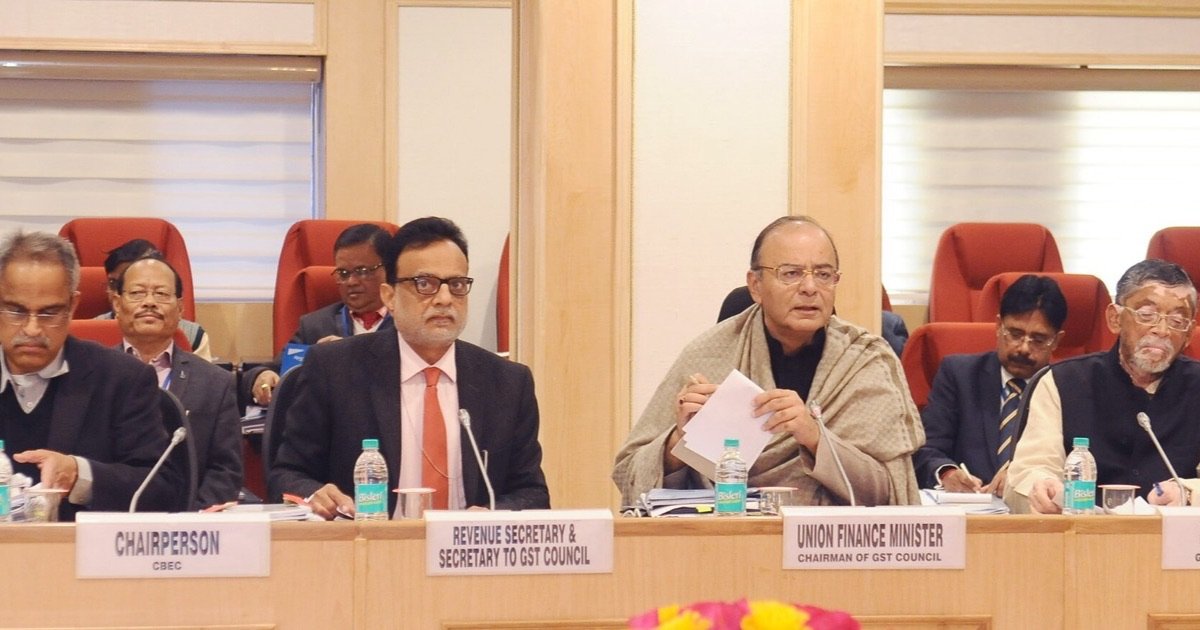
Rates and most major policy decisions are recommended by the GST Council, set up under Article 279A of the Constitution. It is chaired by the Union Finance Minister and includes the finance ministers, or nominated ministers, of every state and Union Territory with a legislature. The Centre holds one-third of the voting weight and the states together hold two-thirds, and a decision needs a three-fourths majority of weighted votes.
The Council revises rate slabs and moves items between them from time to time. The current rate for any product or service is listed in notifications on the CBIC GST portal, which is the authoritative place to check.
Registration and returns
Businesses above a turnover threshold must register for GST and receive a 15-character GSTIN. Registered businesses file regular returns: GSTR-1 for outward sales and GSTR-3B as a summary return with tax payment. Small businesses can opt for the composition scheme, which allows a flat rate on turnover with simpler compliance, but they cannot claim input tax credit or charge GST on invoices.
What GST does not cover
Some items remain outside GST. Petroleum crude, diesel, petrol, natural gas and aviation turbine fuel are constitutionally within GST but have not yet been brought under it, so states and the Centre continue to tax them separately. Alcohol for human consumption is outside GST altogether.
Codes on your bill: HSN and SAC
Every item on a GST invoice is classified by a code. Goods use HSN (Harmonised System of Nomenclature) codes, an international system for classifying products. Services use SAC (Services Accounting Codes). The code decides which rate applies, which is why disputes over classification, such as whether a product is a snack or a sweet, regularly reach tax tribunals and courts.
Reverse charge
Normally the seller collects GST and pays it to the government. Under the reverse charge mechanism, the buyer pays the tax instead. It applies to certain specified goods and services, such as services from a goods transport agency or legal services from an advocate to a business, and to some purchases from unregistered suppliers. For businesses, getting reverse charge wrong is a common compliance mistake.
E-way bills and e-invoices
To curb tax evasion, GST added digital tracking:
- An e-way bill is generally required to move goods worth more than ₹50,000 in a vehicle. It is generated online and checked at roadside inspections.
- E-invoicing requires larger businesses to register invoices on a government portal, which assigns each one a unique reference number and QR code. The turnover threshold has been lowered in stages so that more businesses are covered.
If you have been charged GST wrongly
If a shop charges GST but gives no GST invoice, charges a rate that looks wrong, or charges GST on top of a printed MRP (which already includes all taxes), you can:
- ask for a proper invoice showing the GSTIN and the tax breakdown;
- verify the seller's GSTIN on the GST portal;
- complain to the National Consumer Helpline on 1915 or through its app.
For consumers
- Check that a bill shows the seller's GSTIN.
- You can verify a GSTIN on the official GST portal.
- A GST bill is also useful if you need to claim a warranty or a refund.
Sources
Spotted an error? Write to dileep@zentixservices.com. Read our corrections policy.