
Centre sends states an extra ₹1.09 lakh crore in tax share ahead of festive season; Uttar Pradesh gets the most
The Finance Ministry released an additional instalment of ₹1,09,019 crore to 28 states on 31 October, on top of the regular monthly transfer. It is the second such advance this financial year.
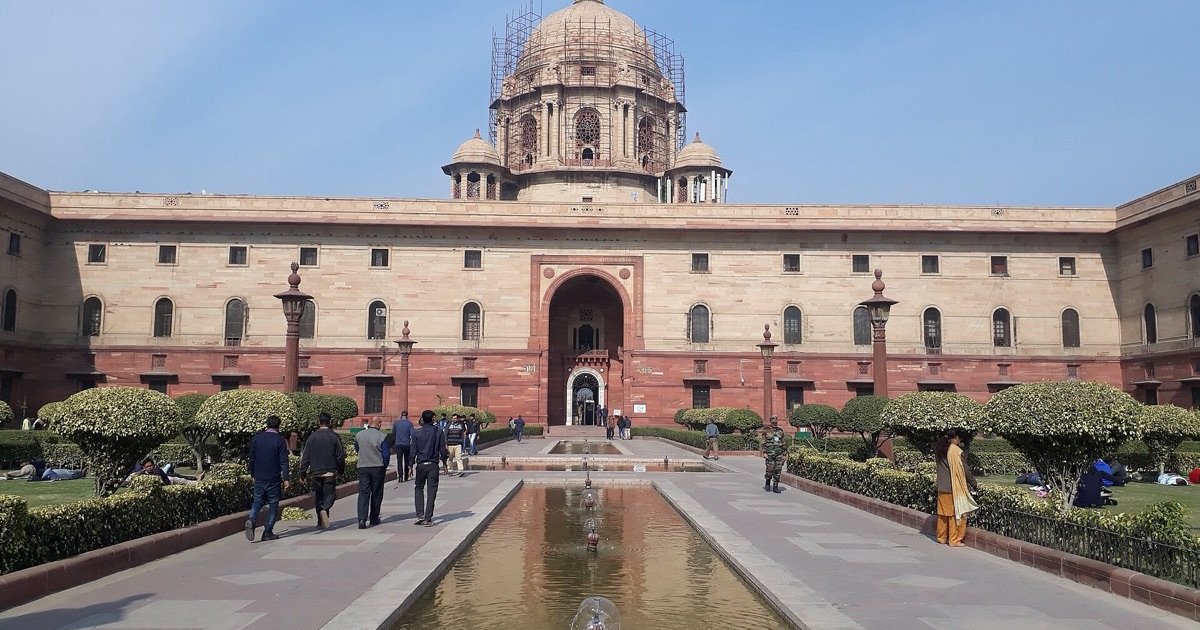
State governments received an extra ₹1,09,019 crore from the Centre on Saturday, 31 October, as an advance on their share of central taxes, the Finance Ministry said that evening.
The money comes on top of the regular monthly instalment that states receive. The ministry said this is the second additional instalment of the 2026-27 financial year, and that it was released in view of the coming festive season, to help states speed up capital spending and pay for development and welfare schemes.
Who got how much
All 28 states received a share. By our calculation, the six largest amounts account for more than half of the total:
- Uttar Pradesh: ₹19,208 crore (17.6% of the total)
- Bihar: ₹10,845 crore (9.9%)
- Madhya Pradesh: ₹8,010 crore (7.3%)
- West Bengal: ₹7,866 crore (7.2%)
- Maharashtra: ₹7,022 crore (6.4%)
- Rajasthan: ₹6,460 crore (5.9%)
The other states received:
- Odisha: ₹4,819 crore
- Andhra Pradesh: ₹4,597 crore
- Karnataka: ₹4,504 crore
- Tamil Nadu: ₹4,466 crore
- Gujarat: ₹4,094 crore
- Jharkhand: ₹3,660 crore
- Chhattisgarh: ₹3,602 crore
- Assam: ₹3,552 crore
- Kerala: ₹2,597 crore
- Telangana: ₹2,370 crore
- Punjab: ₹2,176 crore
- Haryana: ₹1,484 crore
- Arunachal Pradesh: ₹1,476 crore
- Uttarakhand: ₹1,244 crore
- Himachal Pradesh: ₹996 crore
- Tripura: ₹699 crore
- Meghalaya: ₹688 crore
- Manipur: ₹682 crore
- Mizoram: ₹615 crore
- Nagaland: ₹524 crore
- Goa: ₹398 crore
- Sikkim: ₹365 crore
We added up the state-wise figures in the ministry's table and they match the headline total of ₹1,09,019 crore. The top five states alone took 48.6% of the money. Uttar Pradesh's share was about 48 times Goa's.
Union Territories do not appear in the list. They are funded directly by the Centre and are not part of the tax-sharing formula.
What tax devolution is
The Centre collects most of the big taxes in India: income tax, corporation tax, the central part of GST, and customs and excise duties. The Constitution requires it to share a portion of this pool with the states, because states run most of the services people use every day, from police and hospitals to roads and schools, but have fewer ways to raise money themselves.
How much the states get, and how it is split between them, is decided by the Finance Commission, a body set up every five years under Article 280 of the Constitution. Its formula gives weight to factors such as population, area, forest cover and how far a state's income lags behind the richest states. That is why larger and poorer states such as Uttar Pradesh and Bihar receive the biggest cheques, while smaller or richer states get less.
Not every tax is shared. Cesses and surcharges collected by the Centre stay outside the divisible pool, which is a long-running complaint of several states. Our explainer on how GST is split into CGST, SGST and IGST covers the part of the system that states and the Centre run together.
Why release it early
Normally the states' share is paid in monthly instalments through the year. An advance does not increase what a state gets over the full year; it brings forward money the state would have received later.
But timing matters to a state treasury. Salaries, pensions and scheme payments do not wait, and states often need to borrow in the short term when receipts arrive late. A large transfer at the start of November gives them room to pay contractors, clear bills and start capital projects such as roads and buildings before the year's second half, when spending tends to bunch up.
The ministry's reference to the festive season also points to a familiar pressure. Many states pay festival advances or bonuses to employees and step up welfare payments around this time of year.
How it fits the Centre's own accounts
The Centre's books for April to September, released on 30 October, showed that it had collected just over half its expected receipts for the year by the halfway mark. We covered those numbers in our report on the Centre's first-half accounts. Money handed to the states is subtracted from the Centre's gross tax collections before its own revenue is counted, so a large advance shows up as a bigger transfer to states in the October accounts.
The ministry's statement did not say when the first additional instalment of the year was released or how large it was.
Sources
Spotted an error? Write to dileep@zentixservices.com. Read our corrections policy.