

What is the G20, and what did India's presidency change?
The Group of Twenty has no permanent headquarters. The country holding the presidency sets the agenda for its year, and the African Union joined as a permanent member at the New Delhi summit in 2023.
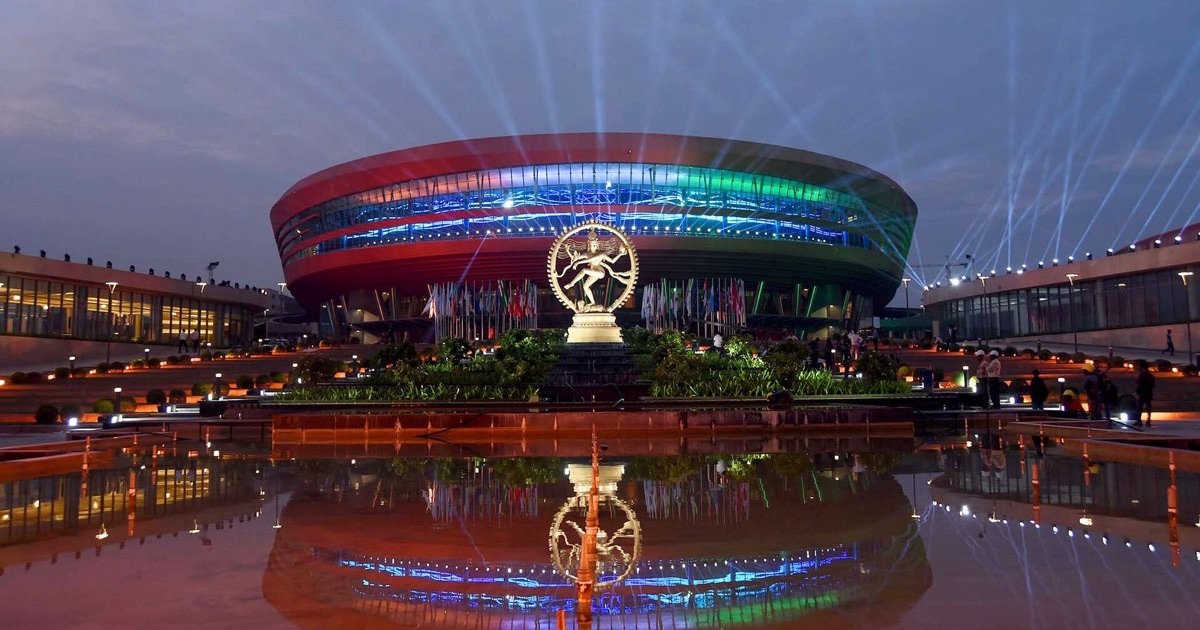
The Group of Twenty, or G20, is a forum of the world's major economies. Its members together account for most of the world's economic output, trade and population. Unlike the United Nations or the World Trade Organization, the G20 has no permanent headquarters or staff. It works through a presidency that rotates every year.
Who is in it
The G20 includes 19 countries: Argentina, Australia, Brazil, Canada, China, France, Germany, India, Indonesia, Italy, Japan, Mexico, Russia, Saudi Arabia, South Africa, South Korea, Türkiye, the United Kingdom and the United States. The European Union is a member, and since 2023 the African Union has been one too.
How it started
The G20 began in 1999 as a meeting of finance ministers and central bank governors after the Asian financial crisis. During the global financial crisis of 2008, it was upgraded to a summit of heads of state and government. It has met at leaders' level every year since.
How the presidency works
The country holding the presidency sets the agenda for its year and hosts the leaders' summit. It works with the previous and the next presidency in a group known as the troika, which provides continuity.
Work runs on two tracks:
- The Finance Track, led by finance ministers and central bank governors, covers the global economy, financial regulation, taxation and development finance.
- The Sherpa Track, led by each leader's personal representative, covers issues such as energy, health, agriculture, digital economy, climate and anti-corruption.
Decisions are made by consensus, and G20 commitments are not legally binding. Their weight comes from the fact that the world's biggest economies have agreed to them.
India's presidency
India held the G20 presidency from December 2022 to November 2023, under the theme "Vasudhaiva Kutumbakam", or "One Earth, One Family, One Future". Meetings were held in many cities across the country rather than only in the capital.
The leaders' summit took place in New Delhi in September 2023. Two outcomes stood out. Leaders adopted the New Delhi Leaders' Declaration by consensus, despite sharp differences among members over the war in Ukraine. And the African Union was admitted as a permanent member, giving the continent's 55 member states a collective seat at the table for the first time.
Engagement groups: beyond governments
Alongside the official meetings, each G20 presidency hosts engagement groups that bring in voices from outside government. They include Business 20 (B20), Youth 20 (Y20), Women 20 (W20), Civil 20 (C20) for civil society, Think 20 (T20) for research institutes, Labour 20 (L20) and Science 20 (S20). Each group sends recommendations to the leaders.
What the G20 has achieved
The G20 is often criticised as a talking shop, but it has produced some concrete results:
- The 2008-09 financial crisis: At the London summit in April 2009, leaders agreed a package of more than $1 trillion, much of it for the IMF and other institutions, to support the global economy.
- Debt relief: In 2020 the G20 set up the Common Framework to help low-income countries restructure their debts.
- Global minimum tax: The G20 backed an OECD-led deal for a minimum corporate tax rate of 15% for large multinational companies, aimed at curbing profit-shifting to tax havens.
Other outcomes of India's presidency
Beyond the African Union's admission, the New Delhi summit saw the launch of the Global Biofuels Alliance and the announcement, on the sidelines, of the India-Middle East-Europe Economic Corridor (IMEC), a proposed trade route linking India to Europe through the Gulf by sea and rail. India also used its presidency to promote digital public infrastructure, systems such as UPI and Aadhaar, as a model for other developing countries.
Who holds the presidency now
After India, the presidency passed to Brazil in 2024 and South Africa in 2025, the first time it was held by four developing economies in a row, counting Indonesia in 2022. The United States holds it in 2026.
The criticisms
The G20 has its critics. It represents the world's biggest economies, but most of the world's roughly 190 countries are not members, though the African Union's entry has narrowed that gap. Because decisions need consensus, statements are often watered down to the lowest common denominator, especially when members are at odds over wars or trade. And because commitments are not binding, there is no penalty for failing to keep them. Supporters reply that no other forum brings these leaders together every year to talk, and that informal agreement among the biggest economies often shapes what bodies such as the IMF and World Bank later do.
Why it matters to India
The G20 is one of the few forums where India sits alongside both the advanced economies and other large emerging economies. Issues it discusses, such as debt relief for poorer countries, reform of multilateral development banks, climate finance and digital public infrastructure, directly affect India's interests.
Sources
Spotted an error? Write to dileep@zentixservices.com. Read our corrections policy.