

The Duckworth-Lewis-Stern method, explained without the maths
When rain cuts a limited-overs match short, DLS decides the new target. The idea is simpler than the tables suggest: it is about resources.
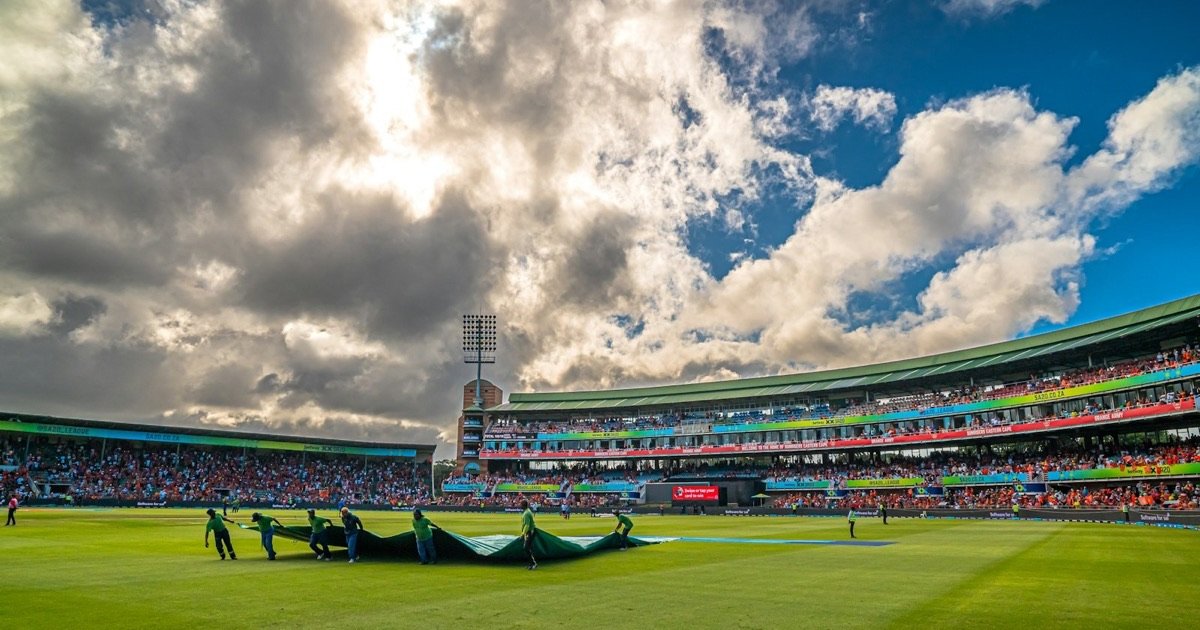
Few rules in sport cause as much head-scratching as the Duckworth-Lewis-Stern method, or DLS. It is used in one-day and T20 cricket to set a fair target when weather or other interruptions reduce the number of overs.
Why simple averages fail
Before DLS, rain rules often used run rates. If a team chasing 250 in 50 overs had its innings cut to 25, the target might be halved. The problem is that this ignores wickets. A team that has 10 wickets for 25 overs can attack much harder than a team that had to pace itself for 50. Earlier rules sometimes produced absurd results, and pressure grew for a better system.
The key idea: resources
Statisticians Frank Duckworth and Tony Lewis proposed that a batting side has two resources: overs remaining and wickets in hand. At the start of an innings, a team has 100% of its resources. As overs pass and wickets fall, those resources shrink.
The two interact. Twenty overs left with nine wickets in hand is worth far more than 20 overs left with two wickets in hand, because the first team can take more risks.
The method uses tables, built from the scoring patterns of thousands of matches, to say what percentage of resources a team has left in any combination of overs and wickets.
How a revised target is set
The basic logic is:
- Work out what share of resources each team had available.
- If the chasing team has fewer resources than the team batting first, its target is reduced in proportion.
- If it has more, the target can go up.
So if Team B has only 80% of the resources Team A had, it needs to score roughly 80% of Team A's total, plus one, to win. The actual calculation includes adjustments for high-scoring modern games, and match officials use software to compute the "par score" at every ball.
Where Stern comes in
The method was first used in international cricket in 1997 and was formally adopted by the ICC in 2001 as Duckworth-Lewis. Professor Steven Stern later updated the model to reflect how modern teams, especially in T20 cricket, score much faster late in an innings. The ICC adopted his revision in 2014, and the method was renamed Duckworth-Lewis-Stern.
What the "par score" on the screen means
During a rain-threatened chase, broadcasters show a DLS par score. If play stops for good at that moment, the chasing team wins if it is ahead of par and loses if it is behind. That is why you sometimes see batters take risks just before a downpour: they are trying to get ahead of par.
When rain falls in the first innings
DLS is not only for chases. If the team batting first loses overs to rain, the method recognises that it paced its innings for more overs than it finally got. In that case, the side batting second can be set a target higher than the first team's actual score. Fans are often surprised by this, but it reflects the fact that the second team knows from the start how many overs it has and can plan accordingly.
DLS in the IPL and other leagues
DLS is used across international cricket and in most major franchise leagues, including the Indian Premier League. In T20 cricket, with so few overs, small changes in wickets lost can swing the par score quite sharply, so captains and analysts keep a close watch on the par figure whenever rain threatens.
India has its own alternative, the VJD method, developed by engineer V. Jayadevan. It has been used in some Indian domestic tournaments, but DLS remains the standard for international matches.
Reserve days
To avoid relying on DLS in the biggest games, tournaments often schedule reserve days for knockout matches. If a semi-final or final is washed out, play resumes the next day, often from where it stopped. If no result is possible even then, tournament rules decide the outcome: for example, the team that finished higher in the group stage may go through.
Common misunderstandings
- "DLS favours the chasing side." The method was designed to be neutral. Studies have found no strong bias, though critics argue specific situations can be harsh.
- "The target is just scaled by overs." No: wickets in hand matter just as much.
- "Players can't see the par score." Teams receive par updates during the match, and broadcasters usually show them on screen.
Minimum overs for a result
A rain-affected match must reach a minimum number of overs per side for DLS to decide it. Under ICC playing conditions, that is 20 overs per side in ODIs and five overs per side in T20 internationals. If that minimum is not reached, the match is declared a no result.
Sources
Spotted an error? Write to dileep@zentixservices.com. Read our corrections policy.