
How a Lok Sabha election works, from the model code to counting day
Who runs India's general elections, what the model code of conduct does, and how EVMs and VVPATs fit into voting and counting.
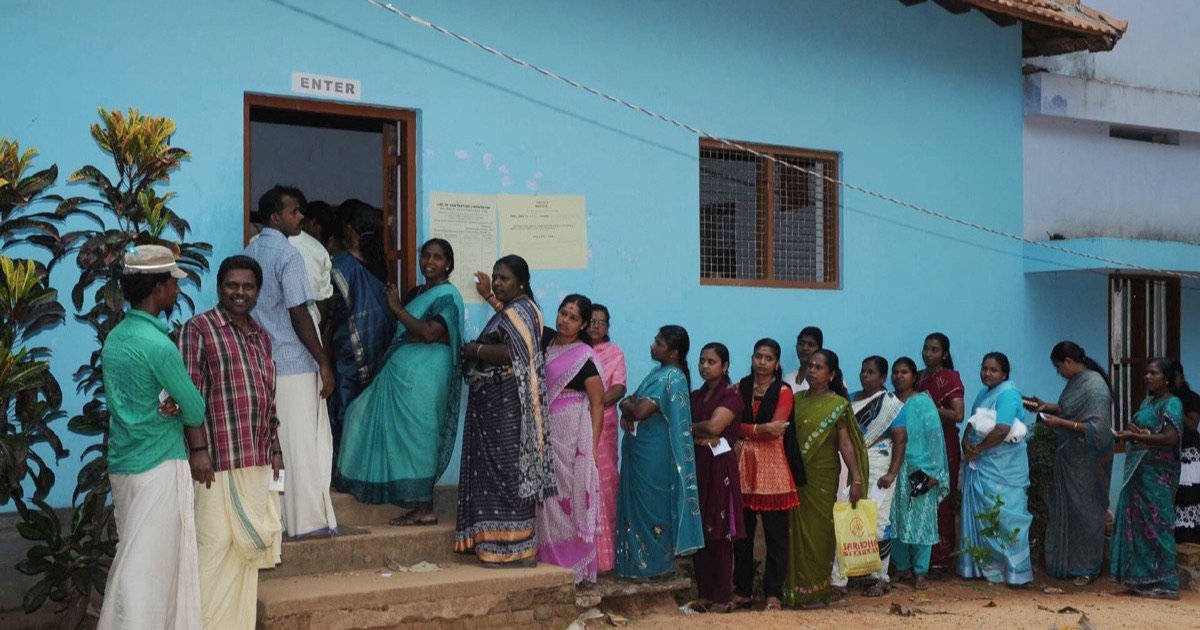
India's general election chooses the 543 elected members of the Lok Sabha, and it is the largest democratic exercise in the world by number of voters.
Who runs the election
Article 324 of the Constitution gives the Election Commission of India the power to supervise, direct and control elections to Parliament and the state legislatures, as well as to the offices of President and Vice-President. The Commission is headed by the Chief Election Commissioner, who sits with Election Commissioners.
On the ground, each state has a Chief Electoral Officer, each district a District Election Officer, and each constituency a Returning Officer responsible for nominations, polling and counting.
The electoral roll
Only people on the electoral roll can vote. Any Indian citizen aged 18 or above on the qualifying date can register in the constituency where they ordinarily live. Rolls are revised regularly, and voters can check their names, apply for registration or update details on the Commission's voter services portal.
The schedule and the model code
When the Commission announces the election schedule, the model code of conduct comes into force immediately. The code is a set of guidelines agreed with political parties. Among other things, it bars the government from announcing new schemes that could influence voters, restricts the use of official machinery for campaigning, and sets rules for rallies, speeches and polling-day conduct. It stays in force until results are declared.
Large elections are held in phases so that security forces and polling staff can be moved across the country.
Nominations and campaigning
Candidates file nomination papers with the Returning Officer, along with an affidavit disclosing criminal cases, assets, liabilities and educational qualifications. These affidavits are public, and the Commission publishes them online. After scrutiny, candidates have a window to withdraw. Campaigning must stop 48 hours before polling ends in a constituency.
Voting: EVMs and VVPATs
Voters cast their votes on an electronic voting machine (EVM), which has a ballot unit where the voter presses a button and a control unit kept with the presiding officer. Since 2019, every EVM in a general election has been paired with a voter verifiable paper audit trail (VVPAT) unit. When a vote is cast, the VVPAT prints a slip showing the candidate's serial number, name and symbol, displays it behind a glass window for about seven seconds, and then drops it into a sealed box.
The ballot also carries a NOTA option, "None of the Above", which lets voters record that they do not support any candidate.
Counting day
On counting day, EVMs are brought from strong rooms to counting centres in the presence of candidates' agents. Postal ballots are counted first. EVM results are tallied round by round. VVPAT slips from a set number of randomly chosen polling stations per assembly segment are counted and matched against the EVM count.
India uses a first-past-the-post system: the candidate with the most votes in a constituency wins, even without an absolute majority.
After the results
The party or coalition that can command a majority of the Lok Sabha, at least 272 of 543 seats, is invited by the President to form the government. The Commission sends the list of elected members to the President, and the new Lok Sabha is constituted.
Who can stand for election
To contest a Lok Sabha seat, a person must be an Indian citizen, at least 25 years old, and registered as a voter somewhere in India (Article 84 and the Representation of the People Act, 1951). People convicted of certain offences and sentenced to two years or more are disqualified.
Candidates pay a security deposit of ₹25,000, or ₹12,500 for Scheduled Caste and Scheduled Tribe candidates. They lose it if they fail to win more than one-sixth of the valid votes in their constituency. That rule is meant to discourage frivolous candidates.
Limits on spending
The Election Commission caps how much each candidate can spend on their campaign. For Lok Sabha seats, the limit is ₹95 lakh in larger states and ₹75 lakh in smaller states and Union Territories. Candidates must keep a register of expenses and submit accounts after the result. Spending by political parties is not capped in the same way, which critics have long called a gap in the rules.
Voting from home and by post
Not everyone has to go to a polling booth. Voters aged 85 and above, and people with benchmark disabilities, can apply to vote from home. Polling staff visit with a sealed ballot, and the visit is recorded. Service voters, such as members of the armed forces, and staff on election duty, vote by postal ballot.
Reporting violations: the cVIGIL app
Citizens can report breaches of the model code, such as cash or liquor being handed out, or posters on public property, through the Commission's cVIGIL app. You upload a photo or video taken live with the app, and it is tagged with your location. The Commission aims to act on complaints within 100 minutes.
Check your own details
- Search your name on the electoral roll at the voter services portal.
- Use the Voter Helpline app or call 1950 for queries.
- Look up candidate affidavits before you vote.
Sources
Spotted an error? Write to dileep@zentixservices.com. Read our corrections policy.